
What is neuroplastic pain or illness?
Pain doesn’t always come from an injury.
Many people assume that pain and illness must result from injury, disease, or other physical changes. But new research shows that persistent symptoms can be caused or prolonged by neural patterns in the brain. When your nervous system reacts to stress, trauma, emotions or other life challenges, it can generate real physical pain or illness as an alarm signal. These symptoms, which are called “neuroplastic,” can occur whether or not you have a documented medical diagnosis. Fortunately, scientifically validated treatments that retrain the brain to reverse these patterns can reduce or eliminate these symptoms.
Medically Reviewed
Dan Ratner, PsyD
Psychologist and Board Chair
This page is published by ATNS, a 501(c)(3) nonprofit led by volunteer clinicians.
Published: August 14, 2026
Last updated: August 14, 2026
There are two kinds of pain.
All pain is made in the brain, but it comes in two kinds. Structural pain comes from injury or disease in the body, like a broken bone or a kidney stone, and you treat the body to heal it. Neuroplastic pain comes from a danger signal the brain has learned and keeps firing, with no tissue damage behind it.
One of the clearest examples is phantom limb pain, where a person feels real pain in a limb that is no longer there. There’s nothing left to injure, yet the pain is unmistakable because the brain is creating it. In pain that has lasted a long time, neuroplastic is often the more common of the two.
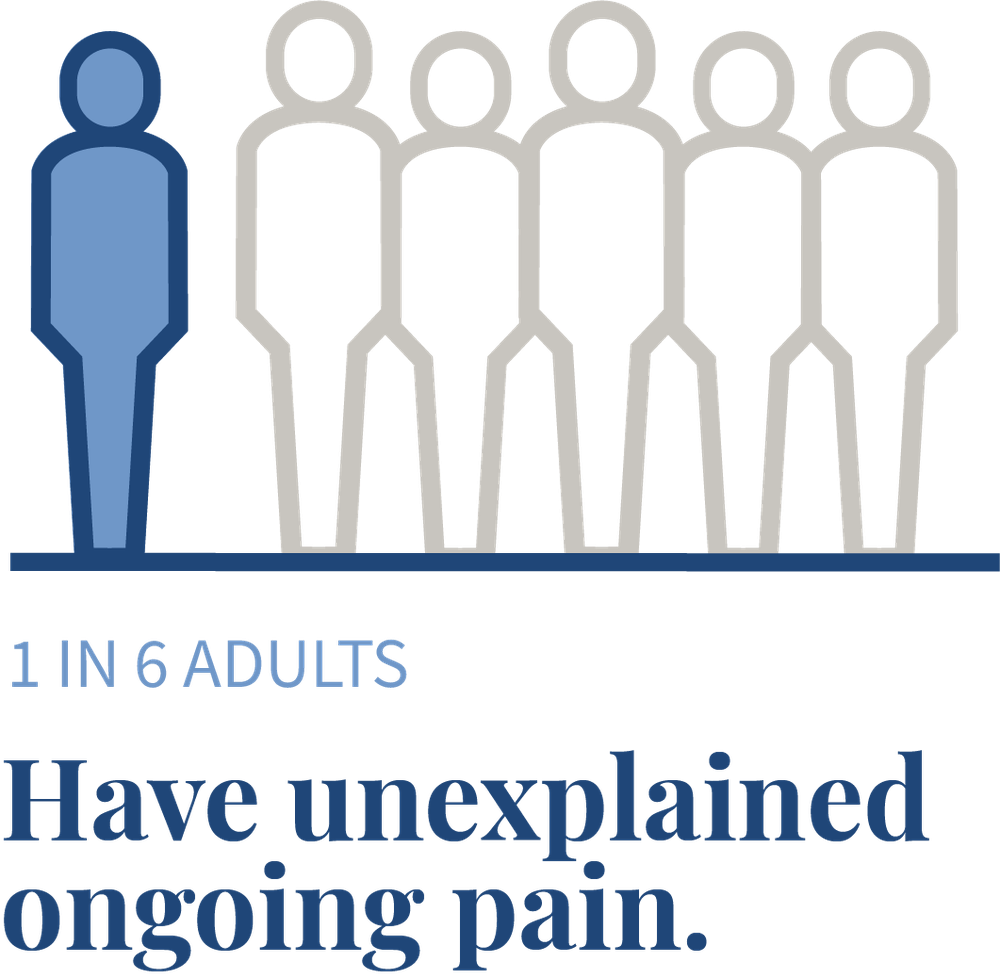
2026 ATNS national survey.
Could your pain be neuroplastic?
It lasts longer than an injury should take to heal
It moves around the body, or comes and goes
It’s set off by things like stress, weather, or certain people, situations or events
Your scans and tests come back normal, or don’t explain how much pain you’re in
It flares with stress or strong emotion
It hasn’t responded to treatments aimed at the body
You have more than one symptom at once
If several of these sound familiar, your pain may be one of many neuroplastic symptoms, and a short self-assessment can help you tell.
What the research shows
2 of 3
people with years of back pain were pain-free or nearly pain-free after a type of neuroplastic recovery therapy.
Ashar et al., JAMA Psychiatry, 2021.
64%
were pain-free after a type of neuroplastic recovery therapy, vs. 25% with mindfulness and 17% with usual care.
Donnino et al., 2021.
Why the brain does this
The brain’s alarm system was built to protect you from physical threats. But stress, strong emotions, and challenging experiences set off the same alarm. In the short term, a stressful day can bring on a headache. Speaking in front of a crowd ties your stomach in knots. There’s no injury, but the sensation is unmistakable.
When stresses persist, the brain can learn to stay on alert and the signal gets stuck in place, sometimes long after the body has healed. This is a protective response, not a weakness or a character flaw.
The alarm also can be set off by problems you might not have recognized or connected to your symptoms. Sometimes that stress goes back further than we tend to notice. One way to see it: picture a child growing up in the circumstances you did. If that brings up sadness or anger, your nervous system might have been dealing with more than you realized.
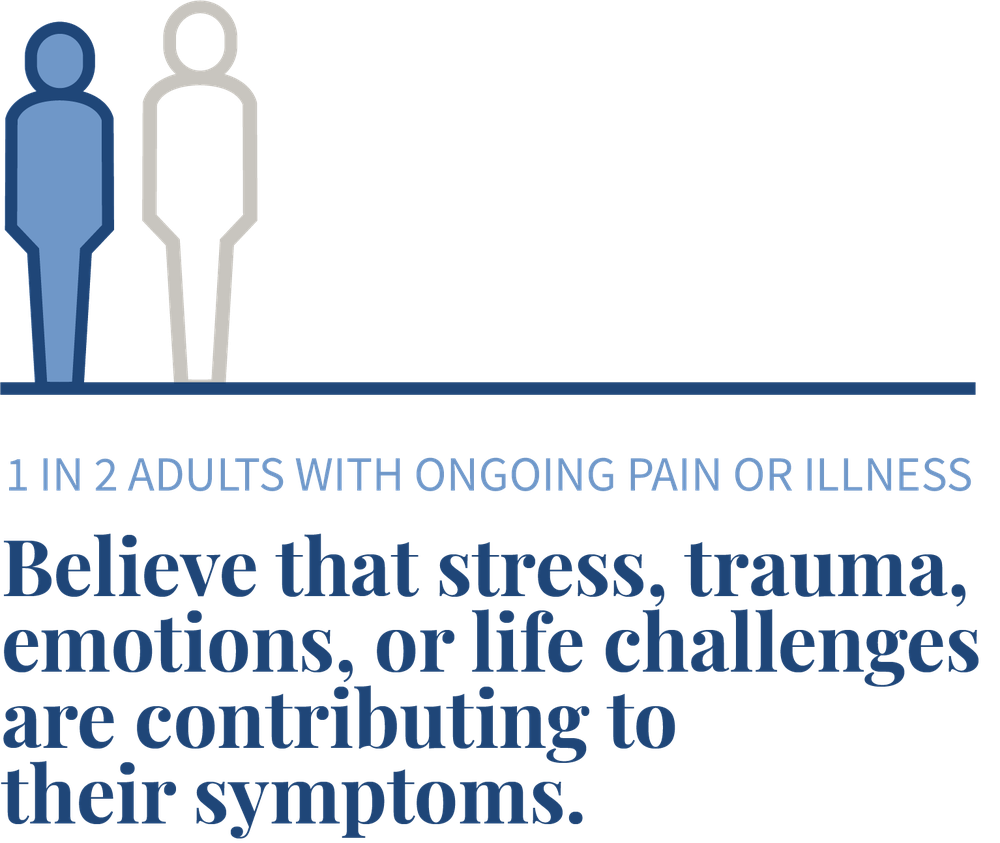
2026 ATNS national survey.
Take the 3-minute self-assessment.
A short, private self-assessment can help you tell whether your symptoms line up with those of others with neuroplastic symptoms. A starting point, not a diagnosis.
What the brain learns, it can unlearn.
Just as the brain learned to talk, walk, and worry, it learned these pain pathways through practice, until they ran on their own. What the brain learns, it can unlearn.
The tools aren’t medicine, supplements, or procedures. They work by teaching the brain that it’s safe, so the danger signal can taper and the pathway can quiet down. You learn to respond to the sensations differently, reading them as a false alarm rather than a sign of damage. With practice, the brain rewires and the pain eases.
Recovery, not just coping, is the usual outcome with neuroplastic recovery therapies.
See what recovery looks like.
Common questions
Can stress really cause physical pain?
Yes. Stress and strong emotions (even when unrecognized) set off the same alarm system in the brain as a physical injury, and that system can produce real pain and other symptoms. A tension headache, or a stomach in knots before a big talk, are everyday examples.
If my scans are normal, why do I still hurt?
Because the pain isn’t coming from damage a scan would show. It’s coming from an alarm signal the brain has learned and kept firing. The pain is real, even when the tissue looks fine.
What’s the difference between neuroplastic and structural pain?
Structural pain comes from injury or disease in the body and is treated by treating the body. Neuroplastic pain comes from learned signals in the brain, with no tissue damage behind them. In long-lasting pain, neuroplastic is often the more common of the two.
Does neuroplastic mean my pain is psychological?
No. Neuroplastic pain is real, physical pain produced by real changes in the brain’s nerve pathways. It isn’t imagined, and it isn’t a sign of weakness, and it can happen to anyone.
Can neuroplastic pain actually go away?
Yes. Because these pathways are learned, they can be unlearned. In studies of people with years of chronic pain, most became pain-free or nearly pain-free.
How do I know if my pain is neuroplastic?
A doctor first rules out injury or disease. Other clues include pain that moves, flares with stress, or hasn’t responded to body-directed treatment. The 3-minute self-assessment is a good place to start.
I already have a diagnosis. Does that rule out a neuroplastic component?
Not necessarily. A diagnosis tells you what your symptoms are called. It doesn’t always explain what’s causing them. Neuroplastic symptoms can exist alongside a known condition, and they can make it more intense or longer-lasting than the condition alone would explain. Treating the neuroplastic part can bring relief even when another diagnosis is also in the picture.
My scan found something. Could my pain still be neuroplastic?
It can. Many scan findings, like bulging discs or mild arthritis, are just as common in people with no pain at all, so they don’t always explain the symptoms. When the pain is more severe or persists longer than the finding would predict, a neuroplastic component is often the reason. A doctor can help sort out how much each is contributing.
I’ve tried therapy and mindfulness and they didn’t help. How is this different?
This isn’t general talk therapy or relaxation. Neuroplastic recovery therapies like Pain Reprocessing Therapy and Emotional Awareness and Expression Therapy target the specific brain pathways producing your symptoms, retraining the brain to read them as safe rather than dangerous. In a head-to-head trial, this approach left 64% of people pain-free, compared with 25% for mindfulness (Donnino et al., 2021). Calming the nervous system can ease symptoms for a while, but these methods aim at the root, which is why the relief tends to last.
Is this the same thing as psychosomatic pain?
You may have heard terms like psychosomatic, psychogenic, or tension pain. They point at something similar, that symptoms can come from the brain and nervous system rather than from tissue damage. But those older labels often get heard as “it’s all in your head,” which isn’t what’s happening here. Neuroplastic is the more accurate term. The pain is real, produced by learned changes in real nerve pathways, and those pathways can change.
Still skeptical?
For clinicians
Neuroplastic recovery therapies are evidence-based and designed to complement standard care, not replace it. Diagnosis begins as it should, with a workup to rule out structural or organic disease. When symptoms persist or don’t respond as expected, multiple studies have shown that treating the neuroplastic component brings far better relief than older approaches.

Go deeper.
Explore books, apps, and podcasts on our self-treatment resources page.