
Neuroplastic Conditions
You probably tried a lot.
Maybe some of it even helped for a while, but the relief never lasted. Maybe the tests keep coming back normal. Maybe you’ve been told it’s a mystery, or that you’ll just have to live with it. If any of that sounds familiar, you’re in the right place.
These could be neuroplastic conditions.
Neuroplastic symptoms can show up almost anywhere in the body, and they look different for everyone. Here are some of the most common.
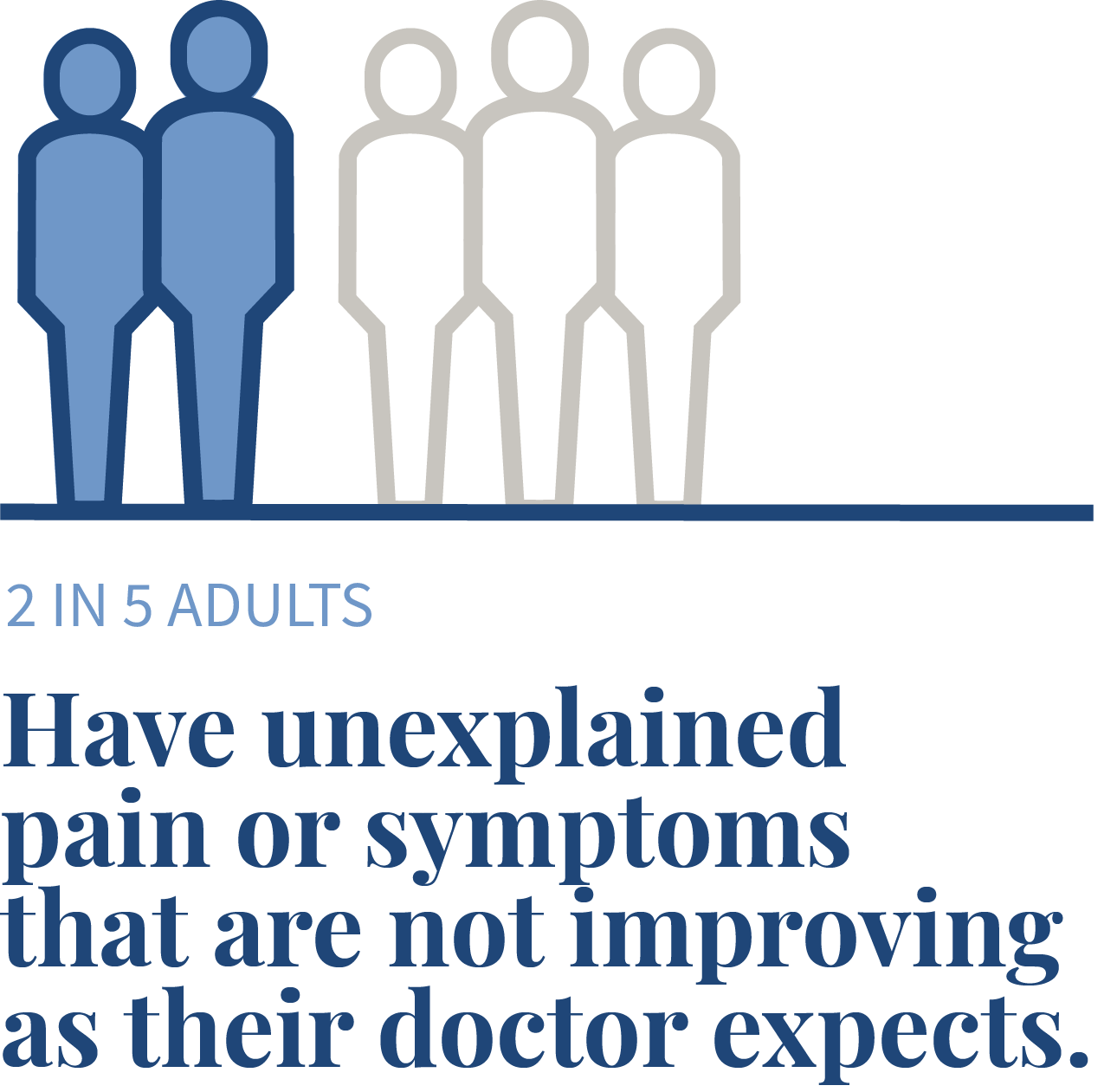
The brain and nervous system can create real, physical symptoms even when the body is healthy and the scans are clear. These are neuroplastic symptoms. When pain or illness lingers, moves around, or doesn’t respond to treatment, those are often signs of neuroplastic symptoms.
Don’t see your symptoms?
There are many more.
Noticed more than one?
If you read through that list and recognized more than one, you’re not alone. Most people with neuroplastic symptoms have two or more. It can feel like a pile of separate problems, but they are usually from one underlying cause that is treatable.

Could your symptoms be neuroplastic?
Take the 3-minute self-assessment.
Many people with neuroplastic conditions also share these traits.
Perfectionism
People-pleasing
Never saying "no"
Not taking time for your own joy
Putting others' needs first
Being hard on yourself
Carrying more stress than you let on
Don’t see your symptoms?
Neuroplastic conditions can cause or contribute to far more symptoms than most people realize. Here is a longer list, organized into skimmable categories — tap a category to expand it:
Alternative Diagnoses
- Adrenal fatigue
- Candida overgrowth
- Cranio-cervical instability
- Dysbiosis/dysbacteriosis
- EBV reactivation
- Electro-magnetic field sensitivity
- Leaky gut
- Mast cell activation syndrome
- Multiple chemical sensitivities
- Multiple food sensitivities
- Small intestine bacterial overgrowth
Cardiology
- Inappropriate sinus tachycardia
- Non-cardiac chest pain
- Postural orthostatic tachycardia syndrome
- Raynaud’s phenomena
Musculoskeletal
- Amplified musculoskeletal pain syndrome
- Chronic joint pain
- Chronic neck pain
- Chronic tendonitis
- Erythromelalgia
- Foot pain syndrome
- Morton’s neuroma
- Myofascial pain syndrome
- Paresthesias
- Piriformis syndrome
- Plantar fasciitis
- Post-surgical incision pain
- Repetitive strain injury
- Thoracic outlet syndrome
- Torticollis
- Whiplash
- Winged scapula syndrome
Genito-Urinary
- Chronic prostatitis
- Dyspareunia
- Frequent urination
- Pelvic congestion syndrome
- Pelvic floor dysfunction
- Persistent genital arousal disorder
- Pudendal neuralgia
- Rectal muscle spasm/rectal pain
- Sexual dysfunction
- Vulvodynia
Mental Health
- Anxiety
- Depression
- Eating disorders
- Insomnia
- Obsessive-compulsive disorder
- Panic attacks
- Post-traumatic stress disorder
- Protracted medication withdrawal syndrome
Gastroenterology
- Chronic heartburn or GERD
- Cyclic vomiting syndrome
- Functional abdominal pain
- Functional dyspepsia
- Irritable bowel syndrome
Neurology
- Benign tremor
- Brain fog, memory difficulties
- Computer vision syndrome
- Dystonias
- Functional Neurologic Disorders
- Hypersensitivity to touch, sound, smell, light, or taste
- Mal de Debarquement syndrome
- Non-epileptic or functional seizure disorder
- Occipital neuralgia
- Persistent postural perceptual dizziness
- Post concussion syndrome
- Post-herpetic neuralgia
- Raynaud’s phenomena
- Restless leg syndrome
- Small fiber neuropathy
- Spasmodic dysphonia
- Stuttering
- Tics
- Trigeminal neuralgia
- Visual snow syndrome
Ear / Nose / Throat
- Burning mouth syndrome
- Choking sensation or “lump in throat”
- Chronic cough
- Chronic tooth or gum pain
- Laryngopharyngeal reflux
- Misophonia
- TMJ or TMD (temporomandibular disorder)
- Tinnitus
Skin
Skin
- Chronic eczema, hives, or itching
- Hyperhydrosis
- Telogen effluvium
For Medical Clinicians
Do you have patients with functional disorders?
Or negative diagnostic evaluation? Or failure to improve as expected?
Neuroplastic recovery starts where good medicine does, by ruling out disease or injury first. From there, addressing a contribution to pain or illness from a neuroplastic condition complements the care you already provide, and often brings relief for patients whose symptoms persist despite standard treatment.
Recovery is the usual outcome.
Most people who address the neuroplastic cause recover, and many get their lives back completely. With the right understanding, treatment, and support, you can get there too.
Explore Recovery Stories
Read About Treatment Approaches
Get Self-Treatment Resources

Could your symptoms be neuroplastic?
Take the self-assessment — a short set of questions that points to where your symptoms may be coming from, and what to do next. Free and private.